Passa alle informazioni sul prodotto
1 su 7
Best Seller

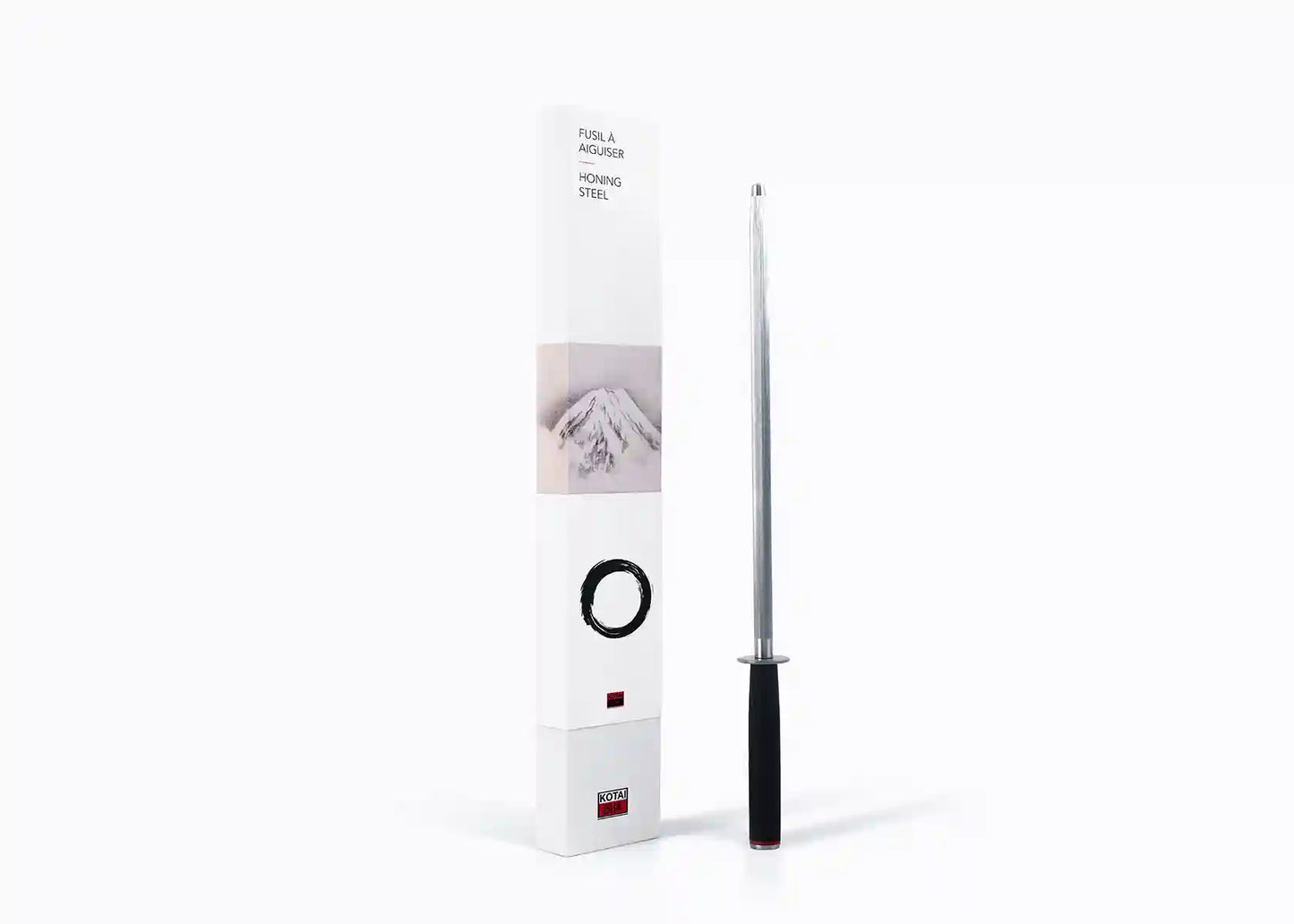
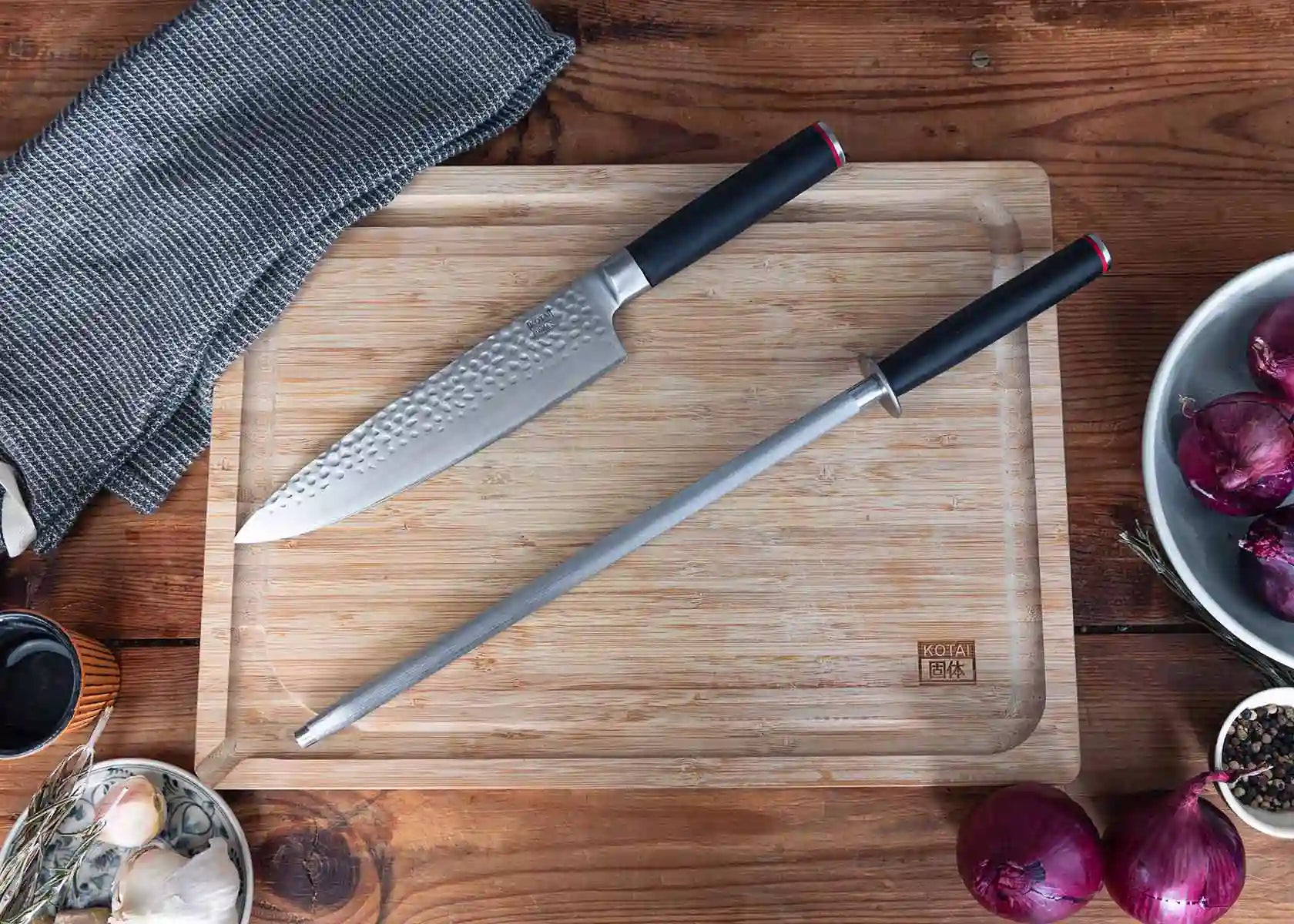
Acciaino per Affilare - Asta da 25 cm

Acciaino per Affilare - Asta da 25 cm

Prezzo di listino €50.00
Prezzo di listino Prezzo scontato €50.00
In offerta Esaurito
Imposte incluse. Spese di spedizione calcolate al check-out.

Care & Sharpening Guide

  • 90-Days Money Back Guarantee
  • Lifetime International Warranty
  • Free Shipping in the US and EU

DESCRIZIONE

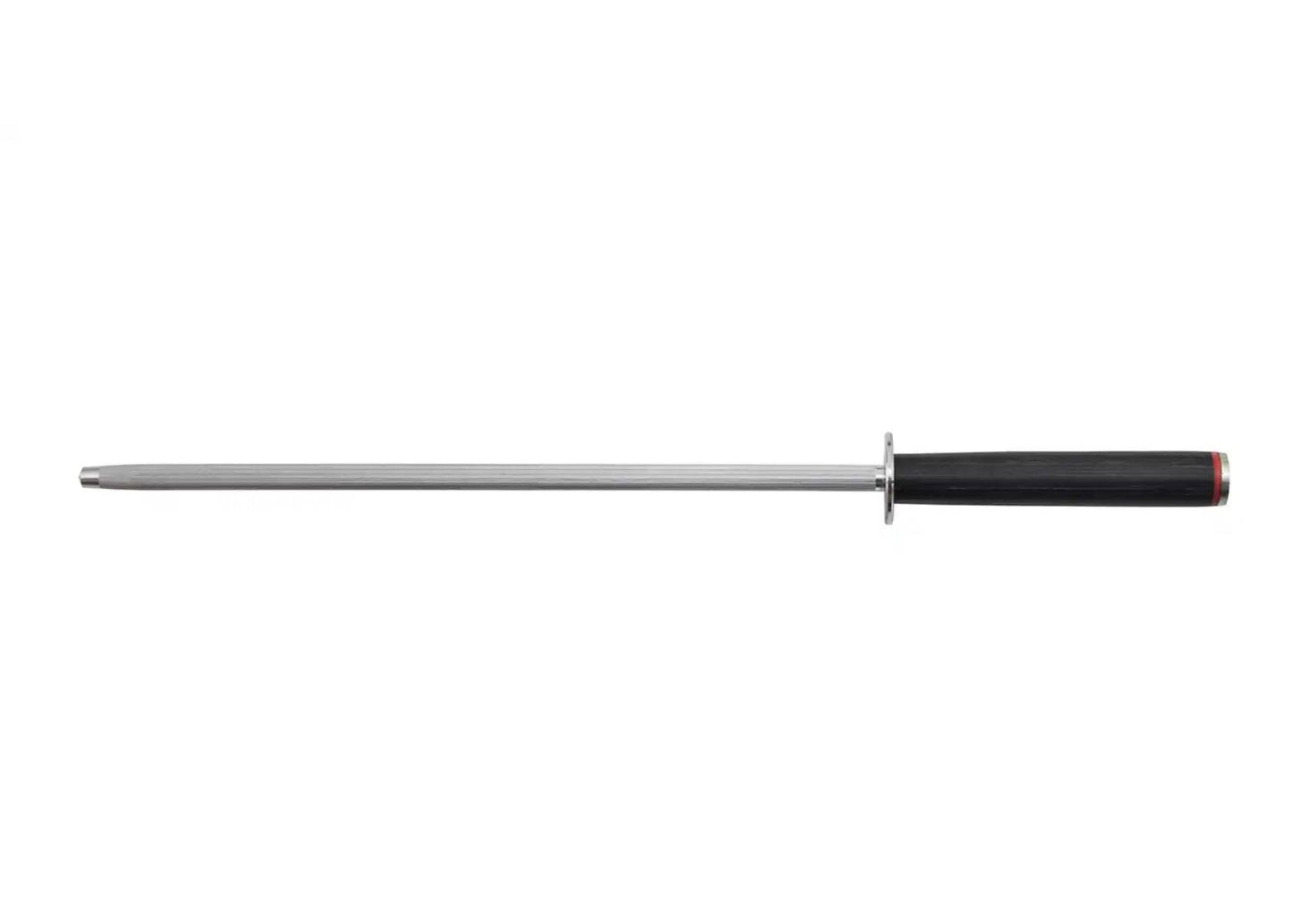
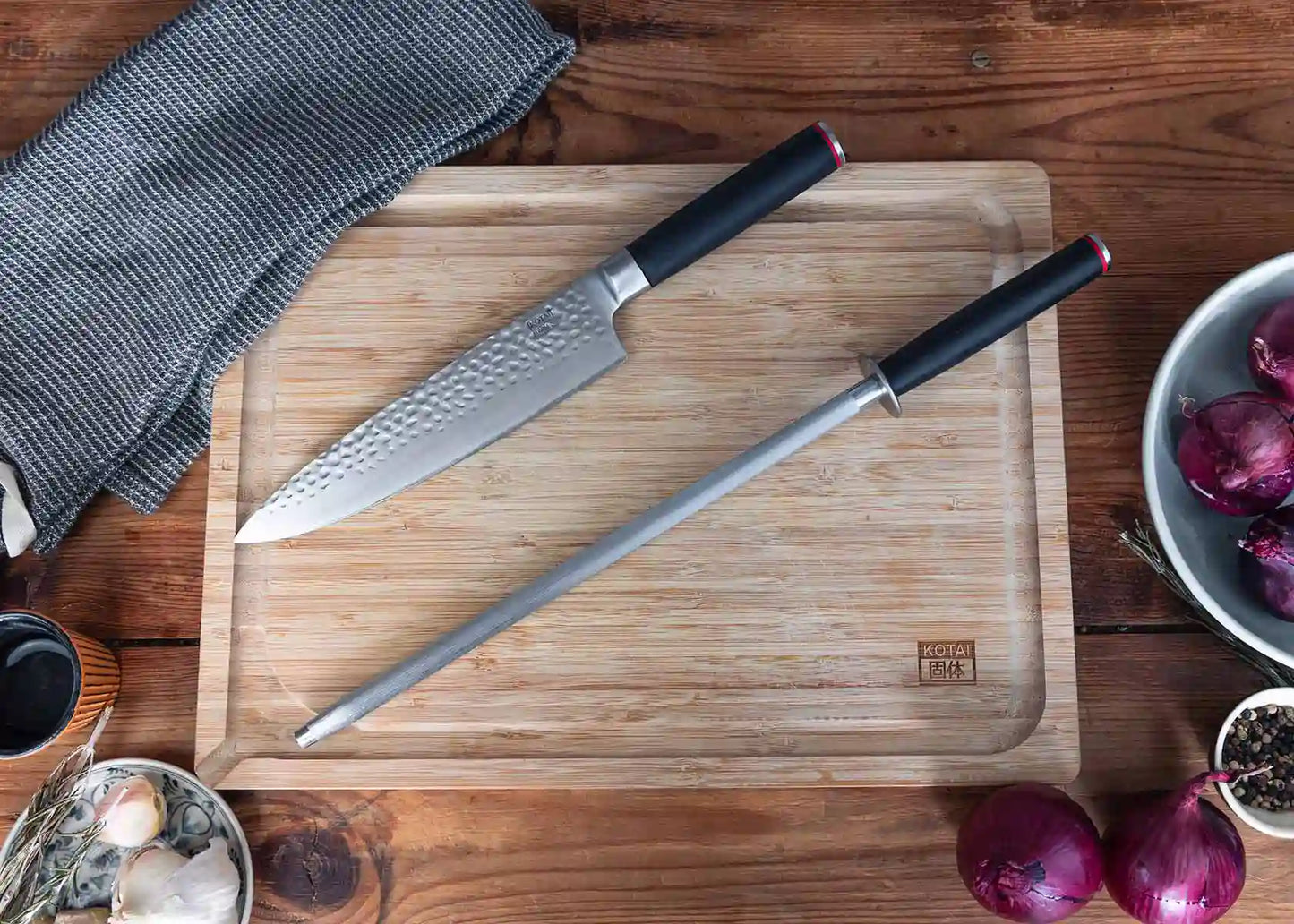
Proprio come ci vuole un diamante per tagliare un diamante, ci vuole un acciaio molto duro per affilare una lama in acciaio. Con una durezza di HRC 65, l'acciaino KOTAI può raddrizzare anche le leghe di acciaio più dure in pochi passaggi.

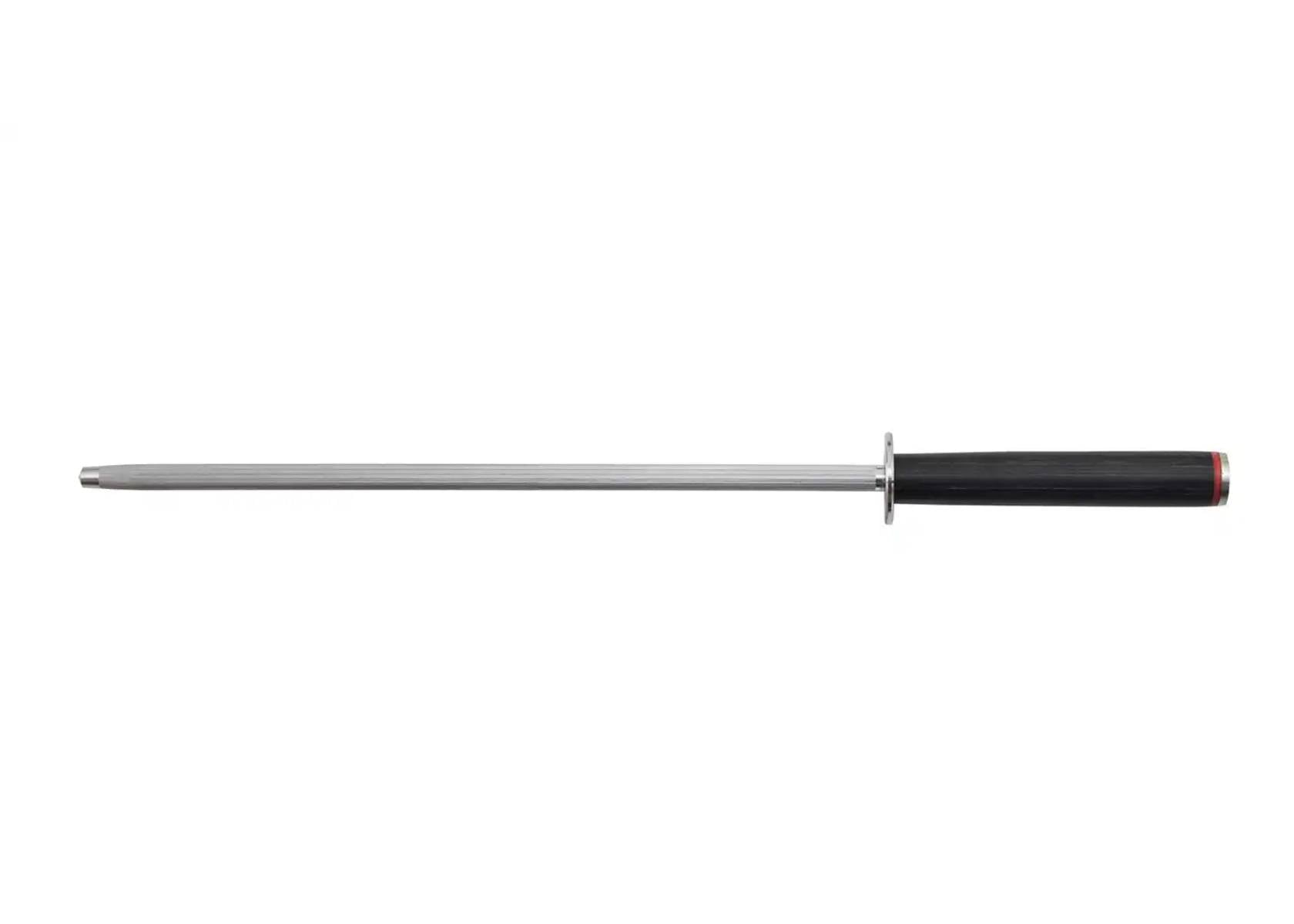
○ Forgiato in acciaio ad alto contenuto di carbonio resistente alla ruggine
○ Mantiene i coltelli affilati come rasoi in pochi secondi
○ Protezione per le dita per la massima sicurezza
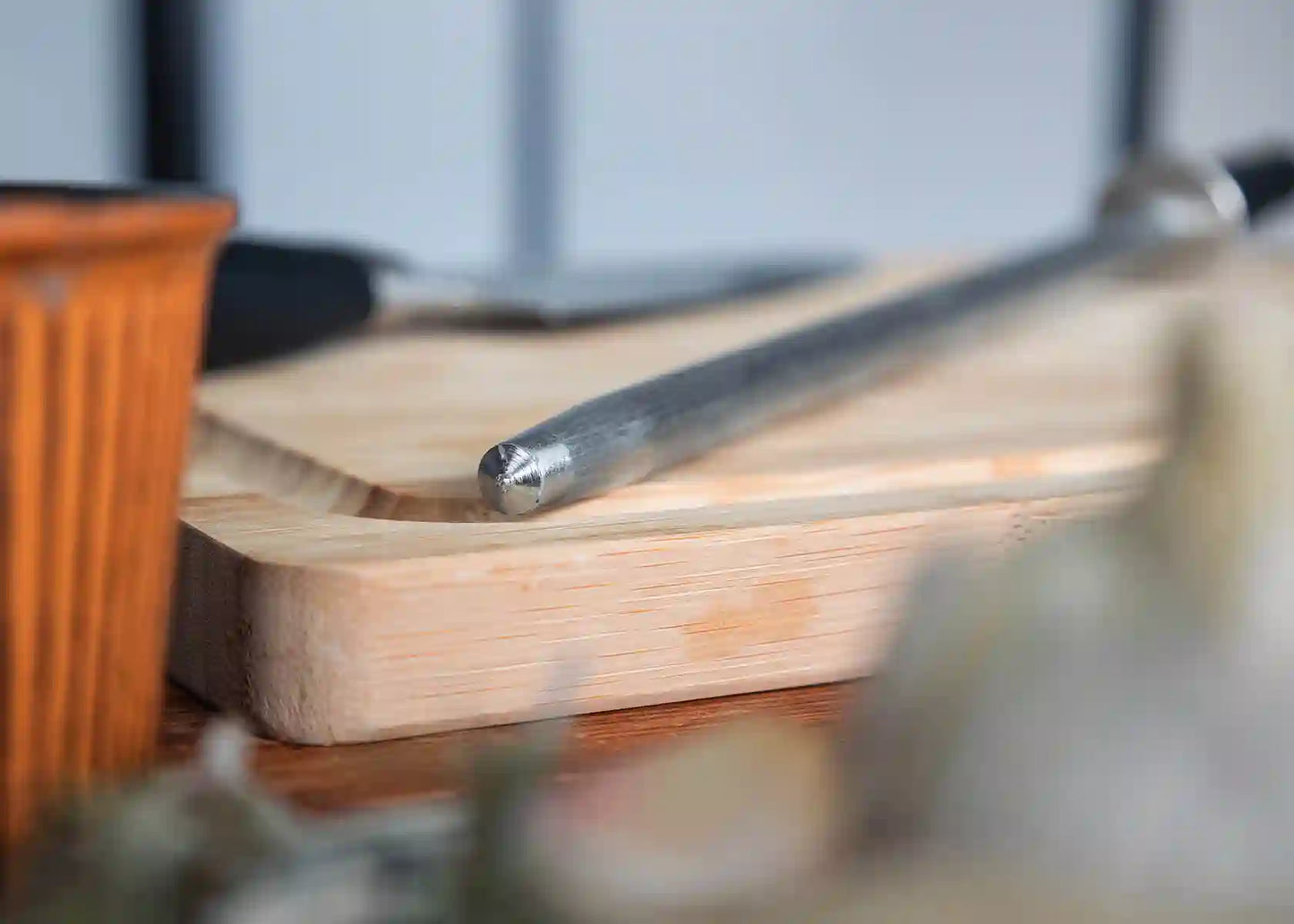
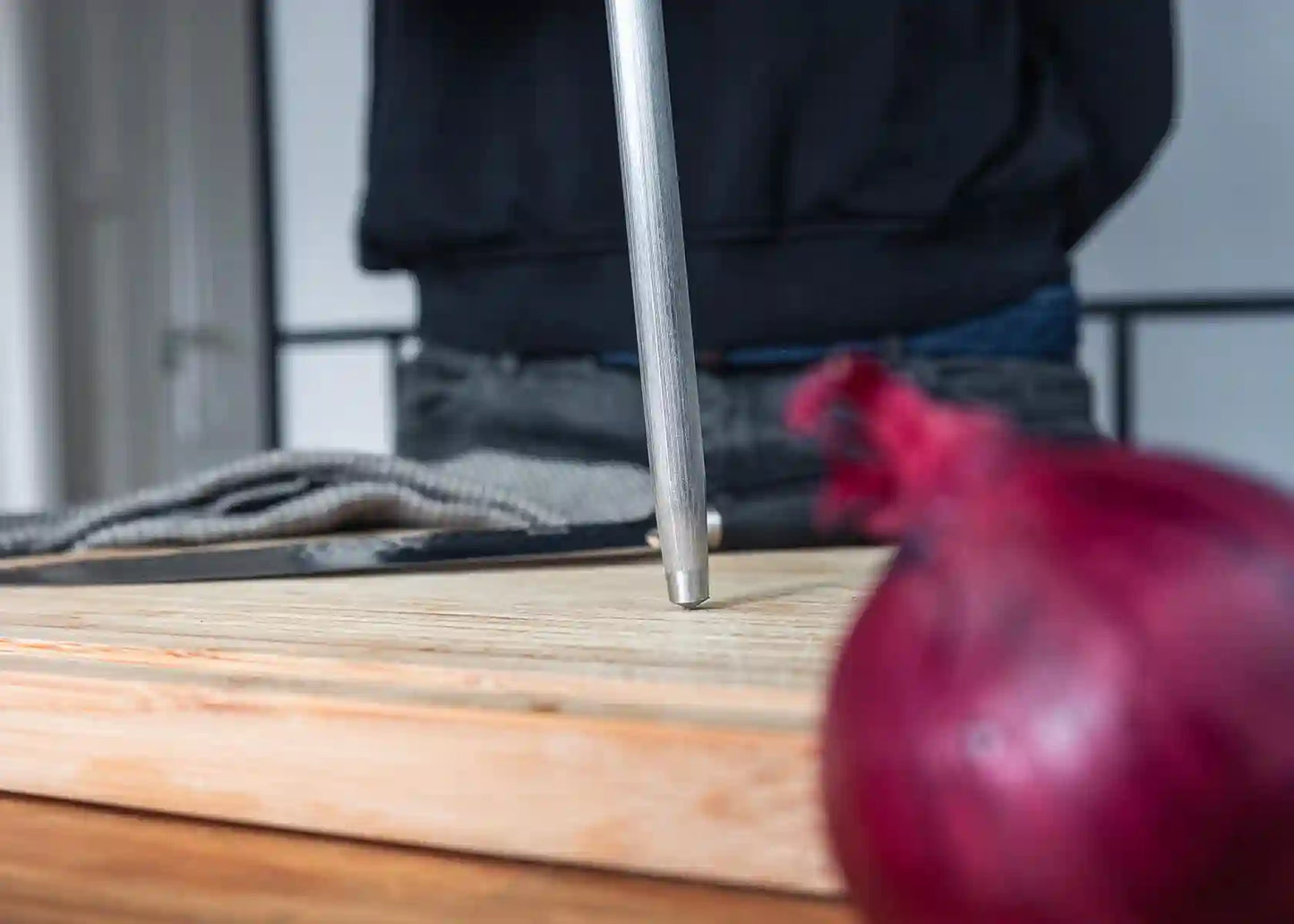
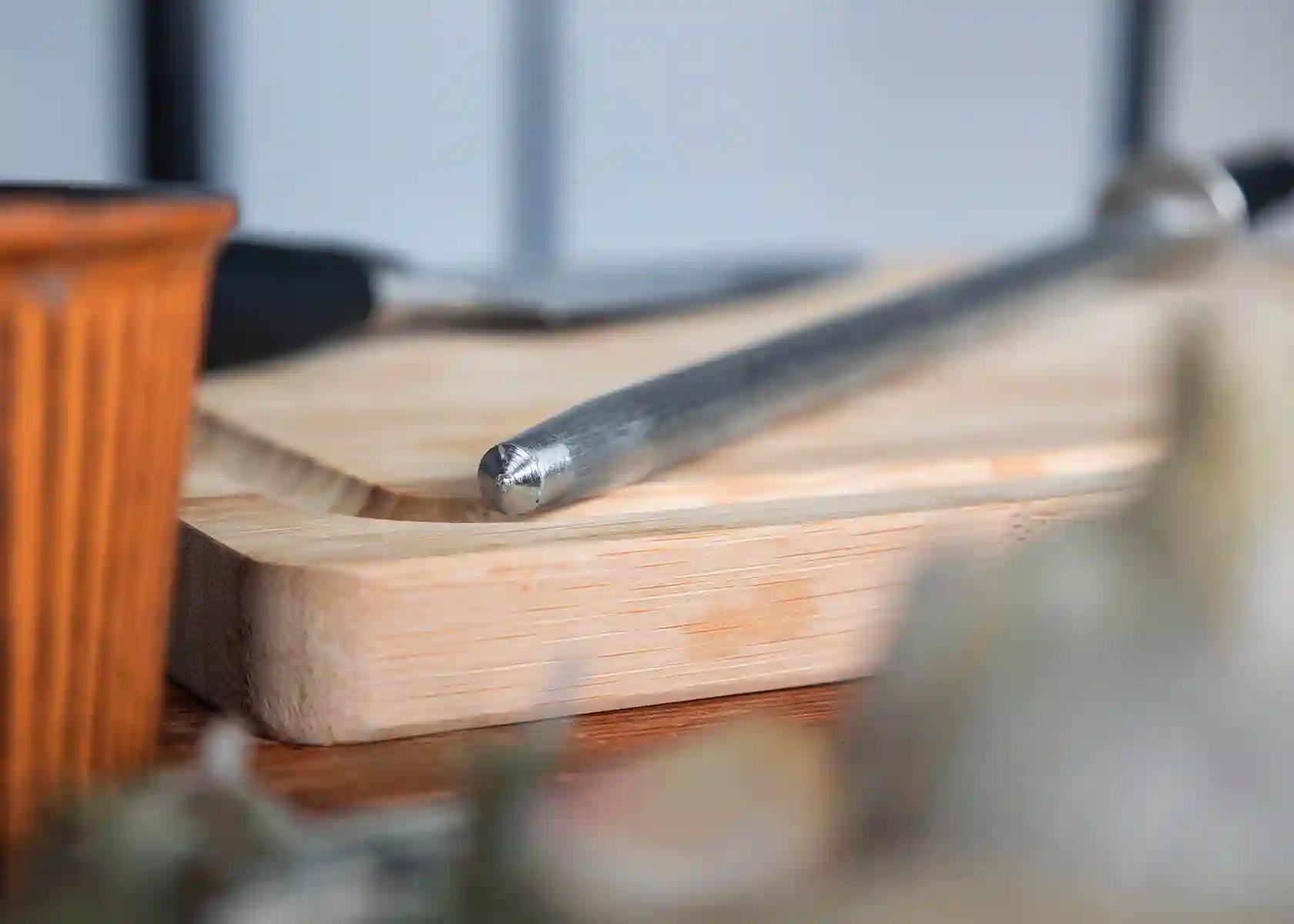
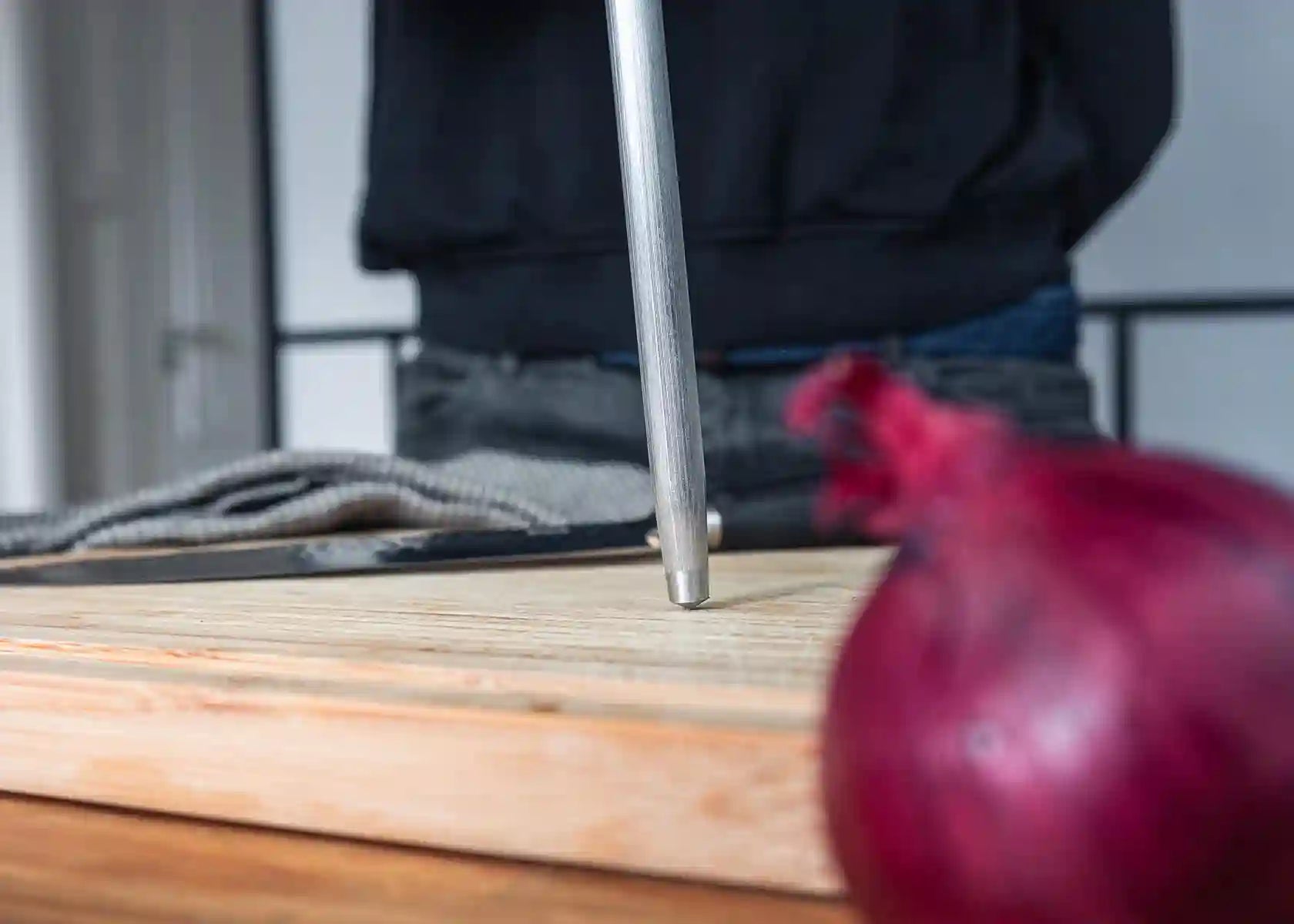
○ Punta a punta per la stabilità
○ Magnetico

SPECIFICAZIONI

Lunghezza asta / Lunghezza totale: 25 cm (9") / 37,3 cm (14")

Peso: 331 g (11.7 oz)

Angolo di affilatura guidata: 15 gradi

Materiale dell'asta: Acciaio al carbonio #75

Durezza dell'asta: HRC 65 +/- 1

Materiale del manico: Legno di Pakka (Pakkawood)

MANUTENZIONE

• Lavare a mano e asciugare dopo il lavaggio

Visualizza dettagli completi
  • Acciaio al carbonio #70

    Proprio come ci vuole un diamante per tagliare un diamante, ci vuole un acciaio molto duro per affilare una lama d'acciaio. Con una durezza di 65 HRC, l'acciaino KOTAI può raddrizzare anche le leghe d'acciaio più dure in pochi passaggi.

  • Riallineamento vs. Affilatura

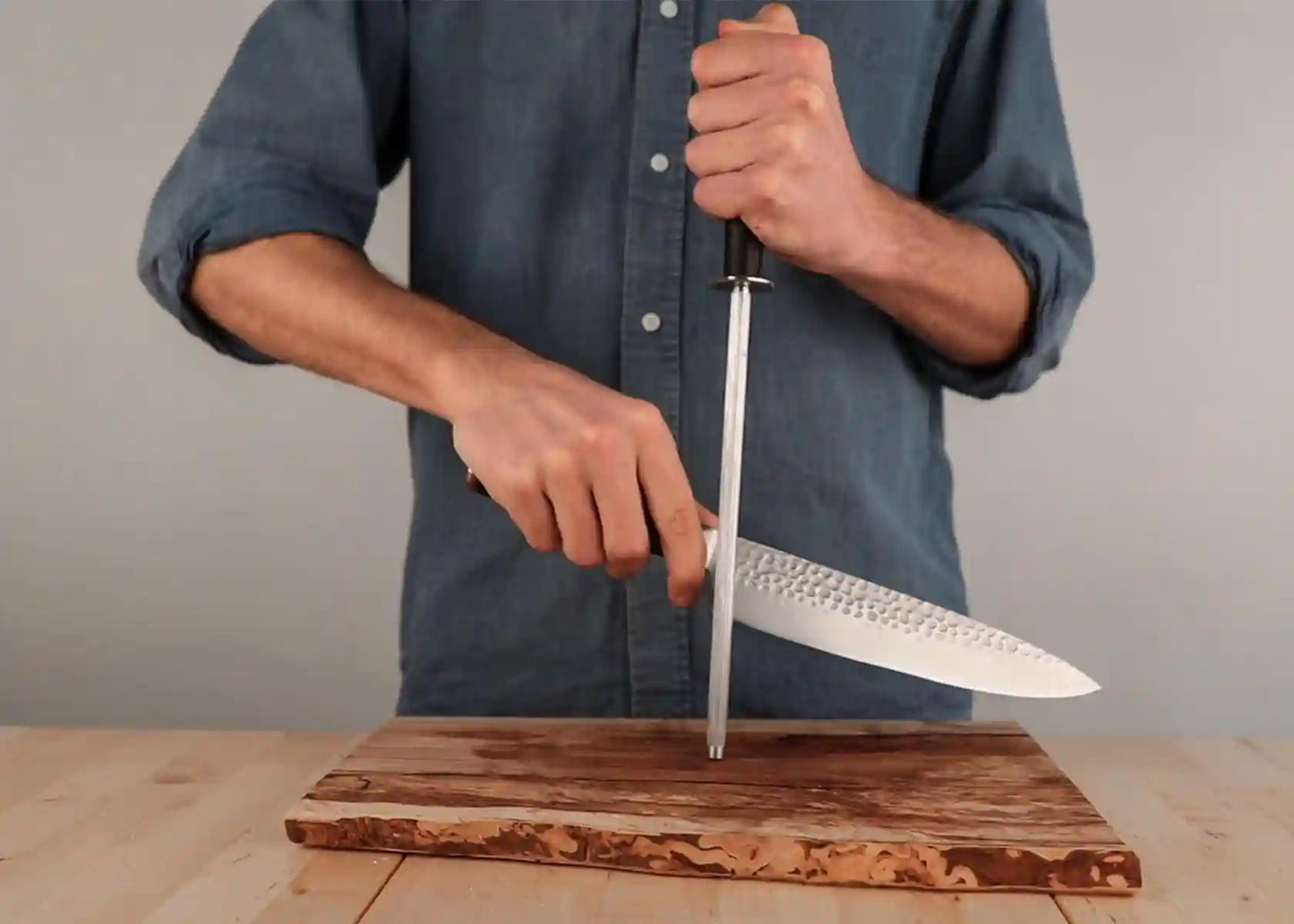
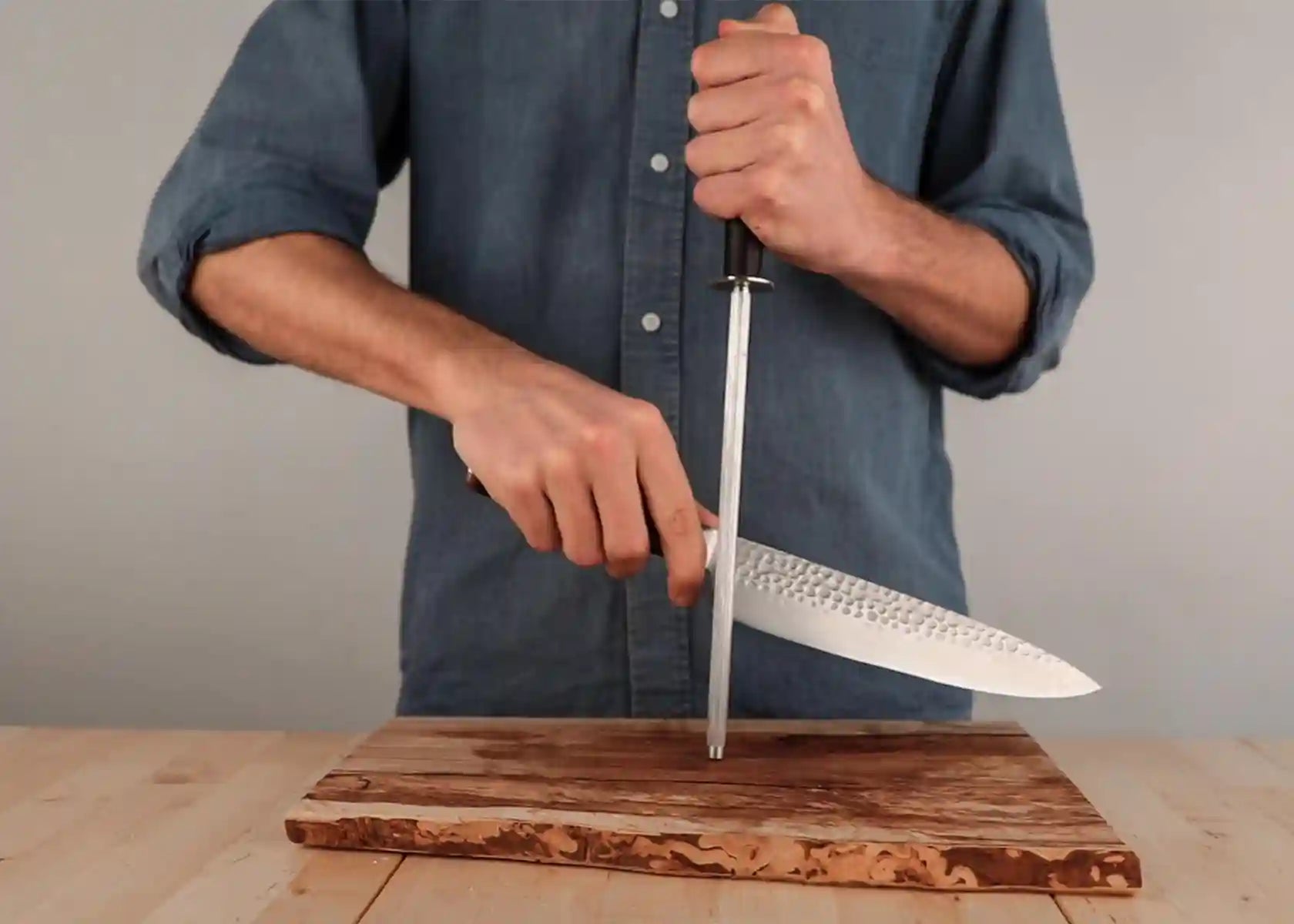
    Il riallineamento (honing) ripristina il filo della lama in pochi passaggi, mentre l'affilatura (sharpening) rimuove il bordo smussato per crearne uno nuovo e affilato. Usa l'acciaino per la manutenzione settimanale e la pietra per affilare per ripristinare il filo della lama quando l'affilatura diventa necessaria.

  • Ottieni l'angolazione giusta

    Per aiutarti ad affilare la lama con l'angolo corretto, la protezione per le dita presenta una guida integrata a 15˚.

Una lama smussata è più difficile da controllare e rischia di scivolare, aumentando le possibilità di ferirsi le dita. Un buon acciaino ti aiuterà a riallineare il filo del tuo coltello per rendere la cucina più sicura, veloce e piacevole. Grazie all'acciaio duro utilizzato nella fabbricazione dei coltelli KOTAI, questi richiedono la riallineatura solo ogni settimana circa, a seconda dell'uso.
hQSfWWgd_d4
  • Picture of Robert Fontana with one of our first knives.

    Robert Fontana

    "Knife experts at the service of gastronomy experts."

  • Chef Philippe Colinet with a Kiritsuke KOTAI knife

    Philippe Colinet

    "The handle feels great in my hand and is well-balanced. I love the hand-hammered pattern on the blade. Excellent craftsmanship."

  • Picture of Chef Matthieu Pasgrimaud using our knife.

    Matthieu Pasgrimaud

    "KOTAI is a brand that elevates your culinary journey by giving you a better cutting experience."

  • Picture of Thibaut Gamba with our knife.

    Thibaut Gamba

    "A powerful knife, yet very comfortable and precise. I always have it right beside me."

  • Picture of Francesco Arena using our knife.

    Francesco Arena

    "I am speechless! The knife is spectacular!"

  • Picture of Chefs Romain Casas & Tiphaine Mollard using our knives.

    Romain Casas & Tiphaine Mollard

    "We are pleasantly surprised by KOTAI since we embraced it. These are excellent tools for everyday use."

1 su 6

Le vostre domande, le nostre risposte

How do I choose my honing rod?

To choose the right honing rod, first look at its HRC hardness: it should be higher than that of your kitchen knives.

For example, KOTAI knives have an HRC hardness ranging from 57 to 61 ±1, while the KOTAI honing rod is 65 ±1.

Also consider safety, with a protective guard and a comfortable grip.→ Sharpening and honing.

How often should I hone my knives?

A professional who spends several hours a day in the kitchen hones their knives every 2 to 3 days. However, a home cook who prepares meals daily for their family can simply sharpen their knives once a month, and it only takes a few seconds.

Sharpening and honing.

What is the difference between honing and sharpening?

Honing (with a honing rod) takes just a few seconds and involves realigning the edge of the blade to restore its sharpness.Sharpening (with a whetstone or oil stone) takes more time and involves creating a new edge on a dull blade. The results last longer than simple honing with a rod, but it doesn’t need to be done often.